


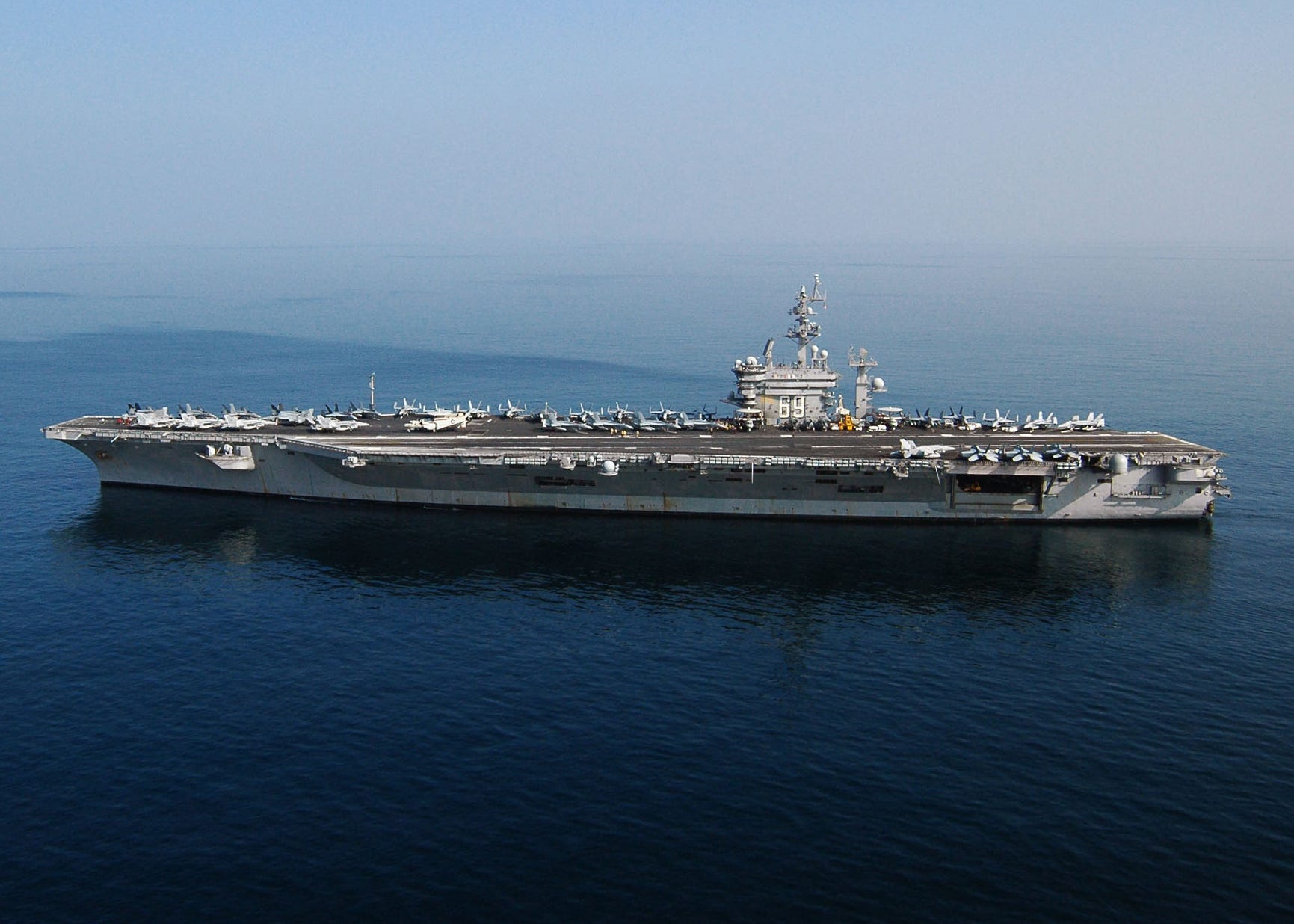
Some of the most enduring risk management lessons predate modern terms. Between 1981-1984, then-Captain Edward W. Clexton Jr., commanding USS Dwight D. Eisenhower, wrote memos on leadership, safety, readiness, supervision, training, crisis management, communication, accountability, culture, human error, quality, trust, and leadership responsibility. Over 40 years later, this guidance remains relevant.
Link to download Clexton Leadership memos at the bottom of the page
A Personal Connection
My connection to these papers began when I was 19, as a Midshipman at the U.S. Naval Academy. One summer, I trained aboard USS Dwight D. Eisenhower under Captain Clexton, whose immense responsibilities I was just beginning to grasp. An aircraft carrier is a complex environment with thousands of people, advanced technology, and risk, where small mistakes can have serious consequences.
Later, at the Naval Academy, Clexton’s leadership memoranda were part of Midshipmen education in the 1980s. About 25 years ago, I asked Clexton if he still had copies; he mailed them to me, and I’ve kept them since.
Vice Admiral Clexton passed away on June 16, 2026.
Sharing these papers honors a Navy leader whose ideas influenced me as a Midshipman, as a Naval Aviator and beyond, and thousands of others serving in the U.S. Navy,
Leadership and Risk
I’m sharing these memoranda via S6RG because, after decades in security and risk management, I now see them as risk leadership documents, not just management tools.
Modern organizations often treat risk management as a separate function, developing assessments, policies, security systems, emergency plans, and compliance programs.
These are important, but they don’t manage risk—people do. And leadership greatly influences their effectiveness. Clexton understood that and applied it in one of the most demanding, high-risk environments.
Safety Is a Leadership Responsibility
In his first memo on command goals, Clexton highlighted Safety, Sanitation, Security, and Service as key principles supporting mission capability and the Eisenhower environment.
His focus on safety is notable. He argued safety must be in leaders’ minds and action-takers’ minds. Accidents aren’t inevitable but preventable through training, qualification, maintenance, supervision, and leadership.
Today, this may be called a risk culture; Clexton called it leadership.
Planning Before the Crisis
In his memorandum Planning vs Crisis Management, Clexton acknowledged that unexpected events will happen.
Planning isn’t about predicting everything; it’s about preparing an organization, so the unexpected doesn’t cause chaos. He stressed realistic planning, anticipating failures, maintaining flexibility, and ensuring two-way communication during execution.
This forms the basis of preparedness, crisis management, and organizational resilience.
Human Error and Quality Control
Clexton’s 1984 memorandum Trust and Confidence highlights a key aspect of modern risk management: accepting human error.
He noted that even well-trained and conscientious people can make mistakes, and while a single error may be harmless, multiple errors can lead to serious incidents.
His solution was not distrust but training, supervision, qualification, maintenance, verification, and continuous quality control—while maintaining trust in the workers. This balance remains central to risk management today: trust people and build systems that acknowledge human fallibility.
Information Is a Risk Control
Clexton recognized the link between information and decision-making. In Grammatics and Thoughts on Communications, he warned against rumors, assumptions, incomplete information, and distorted data as it moves through an organization.
Leaders can’t make good decisions from bad info. This applies to aircraft carriers, corporations, schools, hospitals, manufacturing, or security. Decision quality depends on the quality of information reaching decision-makers.
Culture Becomes Capability
Another recurring Clexton theme is organizational environment. He emphasized respect, recognition, responsiveness, communication, cohesion, and leaders’ obligation to know their people.
This was not just about making people feel good but directly linked organizational environment to performance and mission capability. Culture is often seen as separate from performance, but Clexton understood it as operational capability.
An organization with trusted leadership, open communication, clear expectations, proper training, and work that matters will identify problems sooner, communicate risks better, and respond effectively when issues occur. This makes culture a risk-control mechanism.
Risk Leadership
The key lesson from the Clexton memoranda is that risk management is a leadership responsibility. While security teams identify vulnerabilities, consultants assess risk, technologists install systems, and emergency teams plan, organizational leadership sets the standards, priorities, culture, and accountability that ensure these efforts succeed.
Effective risk leaders ask tough questions: Are our people trained? Does the equipment work? Are we getting accurate information? Do people feel comfortable reporting issues? Are standards enforced? Are we learning from near misses? Are we planning for disruptions? Do staff understand what to do and why?
Most importantly, are we building an organization that detects risk before a crisis? These questions, central to Admiral Clexton’s writings, remain vital today.
Preserving a Leadership Legacy
Some terminology reflects their time, but the leadership principles do not. I shared the complete collection from Admiral Clexton over two decades ago, hoping leaders inside and outside the risk profession will read and reflect on them.
More than forty years after their writing aboard USS Dwight D. Eisenhower, these papers remind us of something easy to forget.