


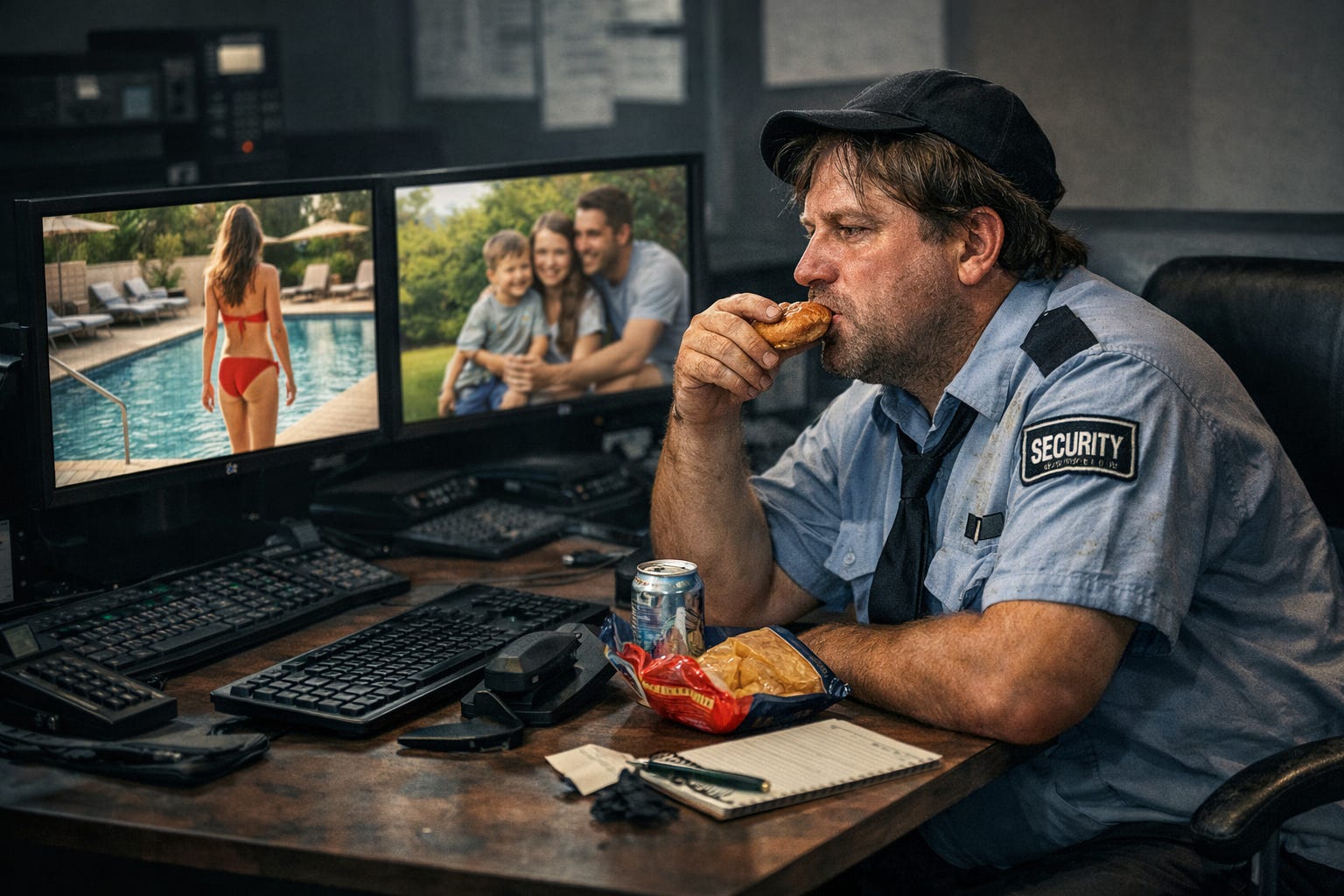
The idea of remote guarding may seem creepy… and for good reasons. But with the right service provider, it doesn’t have to be.
Remote guarding does not increase security risks from camera malfunctions or analytics failures. While some systems perform better than others, overall, the products and services available today improve security programs and make sites safer. However, they can also significantly and unknowingly raise risks related to security, privacy, compliance, and reputation, depending on how operations are managed, who oversees them, and the standards, policies, procedures, and controls in place. Failures often arise from management choices and the standards they follow.
As the adoption of Remote Guarding becomes mainstream, concerning trends are emerging. Despite more reliable technology that seems effective and lower costs, many vendors are struggling to scale and operate from Remote Security Operations Centers (RSOC), which are often under-governed, loosely controlled, and poorly staffed. Clients have simply traded one risk for another.
With Remote Guarding, security now relies not only on on-site equipment, but also on who is monitoring remotely, where they are, and how they are doing it.
You’re not just adding cameras and AI. You’re granting strangers outside access. Are they credentialed? Are they authenticated?
Each remote guarding deployment introduces a new reality for each client—a paradigm shift in extended privacy and compliance risk. It’s a visual vulnerability, a risk that must be evaluated and understood before trusting a vendor.
Somewhere, an operator now has live visibility into your environment. Not snapshots or reports—real-time access to how a property functions, how people move, what they do, and even what they wear. And they know when those people and places are most vulnerable.
Over time, that visibility shifts from mere observation to comprehension. Patterns emerge. Routines become predictable. Gaps are revealed. For high-risk, high-compliance locations, high-value residences, and other sensitive facilities, that level of insight isn’t just operational - it provides a high-definition view into proprietary operations and private lives. It’s exclusive, actionable, and exploitable intelligence.
What’s Often Not Part of the Sales Discussion
Most discussions about remote guarding focus on performance—how well the system detects, how quickly it responds, and how much it saves. What is rarely examined with the same care is the environment on the other side of the connection. Who is watching and from where? What is their training? What policies, procedures, and controls are in place to ensure privacy and confidentiality?
The Remote Security Operations Center, the RSOC, where everything happens, is often overlooked and rarely discussed. A black box. Something assumed to be secure just because it exists. That’s where these new risks are created.
A Failure Mode That Doesn’t Look Like Failure
Imagine a system that appears to work perfectly. Alerts are triggered. Operators respond. Reports are produced. From the client’s perspective, everything seems to function properly.
But behind the scenes, controls are often weak. Access to live feeds exceeds necessary limits. Operator environments lack strict oversight. Monitoring is limited. Activity is not properly audited.
Nothing is “breached.” Nothing is “hacked.” Yet, something more subtle is emerging.
The system and its operators are quietly developing a detailed understanding of the environment—who is there, when they’re gone, how routines change, and where vulnerabilities exist.
Everything is visible and accessible.
The exposure isn’t due to a security incident. It results from a lack of operational controls, supervision, or discipline.
When Remote Guarding Becomes Liability
This is where remote guarding can go beyond just a security risk; it can also increase compliance, privacy, and reputational concerns. What was intended to lower risk can actually elevate it—adding to existing dangers and creating new ones—often silently and without awareness.
The effects don’t become apparent immediately. They appear later, possibly after private videos of your location’s employees or family members are uploaded online. That’s when attention shifts from system performance to accountability. Site managers and security directors may lose their jobs, a family’s privacy gets compromised, reputations are endangered, and regulators begin asking for answers and conducting audits.
Who had access to this information, and what controls managed that access? If those answers are unclear, the issue is no longer technical. It’s legal, reputational, and structural.
The Gap Few See….Until it’s Too Late
From an outside view, most RSOCs appear similar. They share comparable video walls, language, and assertions of effectiveness and cost savings. But a significant, industry-wide gap continues to widen between sophisticated, well-managed, highly compliant operations and those quickly assembled for quick, ad hoc services.
One is built with a structured approach, clearly defined controls, tightly managed access, and ongoing oversight. The other relies on assumptions and an illusion of sophistication created by technological disguises that aren’t genuine.
What Sophisticated Clients Are Starting to Understand
The most informed clients are no longer just concerned with whether a system can detect a threat. They seek something more important: Who and what controls the people and environment operating the service?
That shift—from solely focusing on performance to combining performance with governance—may seem minor, but it has a big impact. Remote guarding doesn’t fail at the camera; it fails at the control point—the RSOC. Once clients fully understand these risks and the industry begins to address them, Remote Guarding will become common across all sectors.
A Practical Starting Point
For those evaluating remote guarding or reassessing an existing deployment, the most important step is to focus on the RSOC itself. Not the marketing, not the interface — the core operations, policies, procedures, and controls.
We developed a concise resource to address that, highlighting the most common gaps observed in real-world deployments and the risks they often pose.
Remote Guarding - Red Flags: What Every Client Should Demand Before Deploying Remote Guarding
👉 Download it here:
Final Thought
Technology has made visibility easier. The key now is control. In remote guarding, control isn’t at the camera; it’s at the other end of the connection.